
Podcast: Take Me To The River
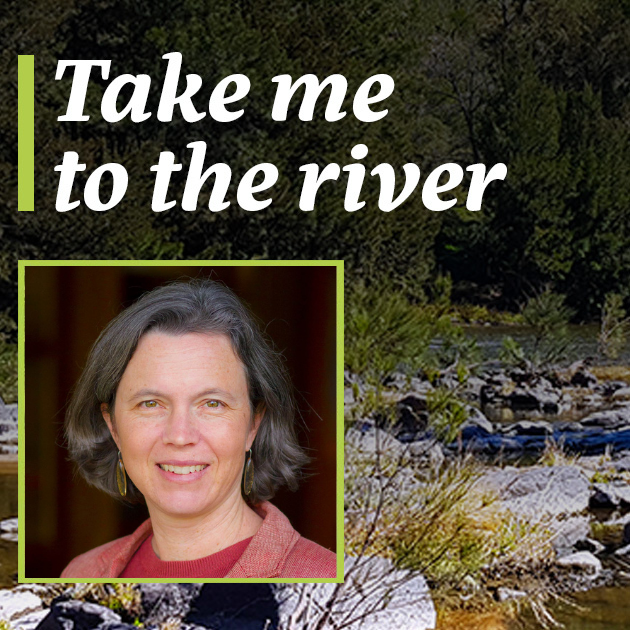
Join Dr. Siwan Lovett, social ecologist and river restoration advocate, as she uncovers the stories of people who live, work and breathe rivers. Our guests are talented and passionate people looking after our rivers who, in sharing their stories, are inspiring hope for the future of our waterways.



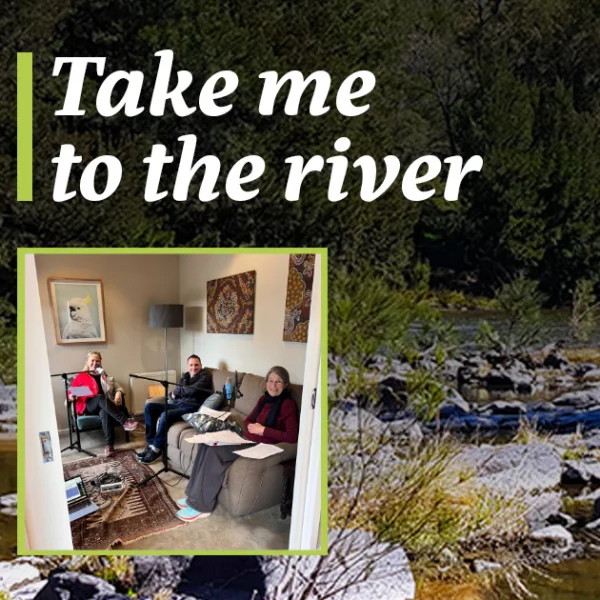
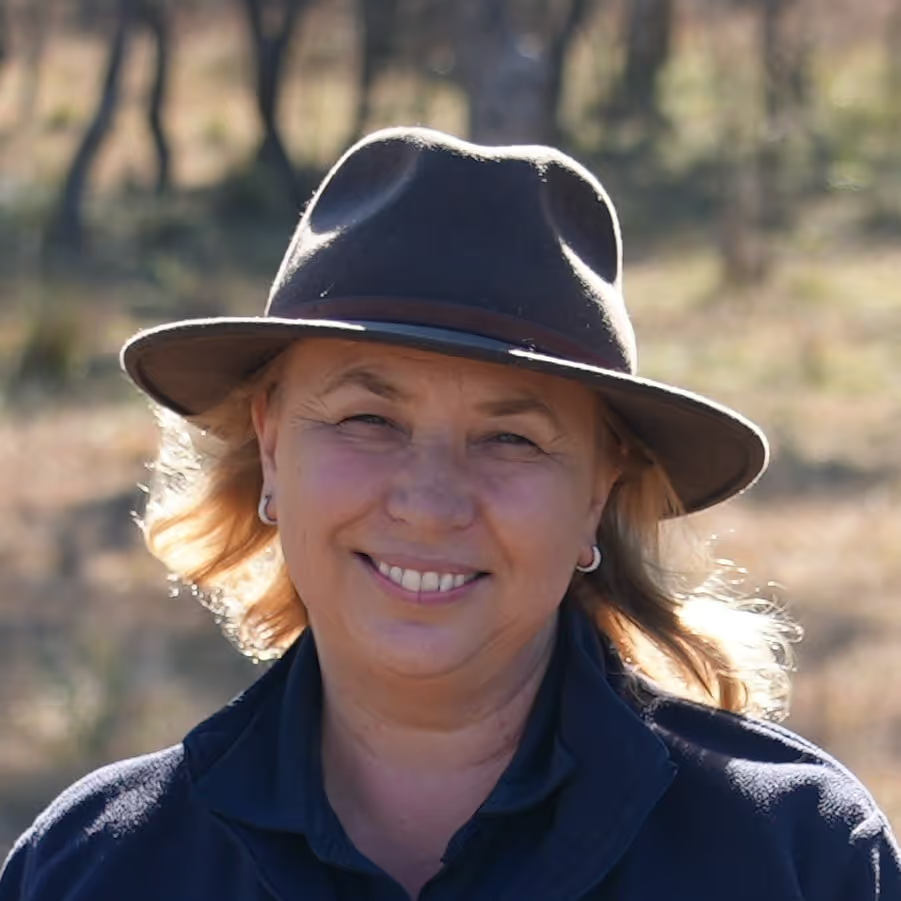
Meet your host: Dr. Siwan Lovett
Join Dr. Siwan Lovett, social ecologist and river restoration advocate, as she uncovers the stories of people who live, work and breathe rivers. Our guests are talented and passionate people looking after our rivers who, in sharing their stories, are inspiring hope for the future of our waterways.
Partner with us
Interested in sharing your river-related story, current project or latest insights on Take Me to the River? Partnering with us gives you the opportunity to share your story with an engaged community passionate about our waterways and climate, reaching audiences where it matters.
Get in touch to learn more about Take Me to the River’s impact and potential partnership opportunities.
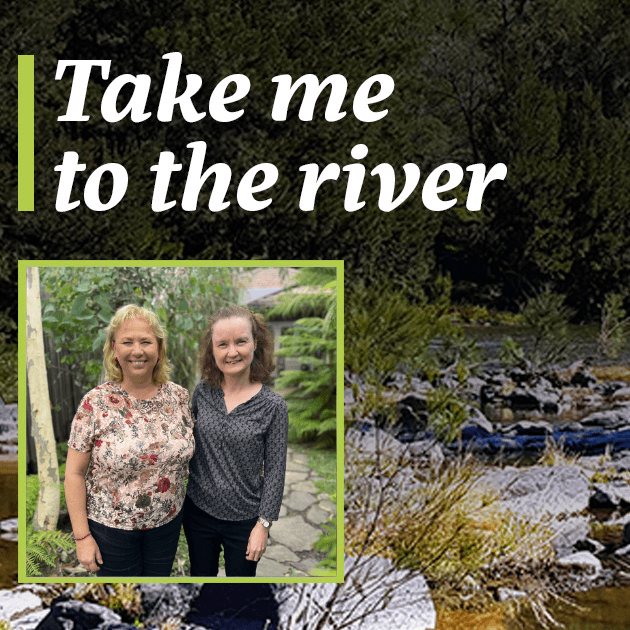
Episode39The Art of Healing Rivers
How do rivers heal themselves? Professor Kirstie Fryirs, co-developer of the River Styles Framework, challenges everything you think you know about river restoration. From heavy metal research in Antarctica to her beloved Franklin River, discover how this pioneering geomorphologist learned to let rivers heal themselves.

Episode38Why platypuses are struggling in southeastern Australia
The platypus is one of Australia’s most iconic creatures, but these remarkable mammals are facing growing threats. In this episode, Josh Griffiths, Senior Technical Advisor at EnviroDNA, shares insights from 17 years of research into platypus populations. From the impacts of drought, habitat loss and climate change to the promise of environmental DNA for large-scale monitoring, Josh reveals both the challenges and opportunities for protecting these enigmatic animals. Tune in to learn how you can help safegu
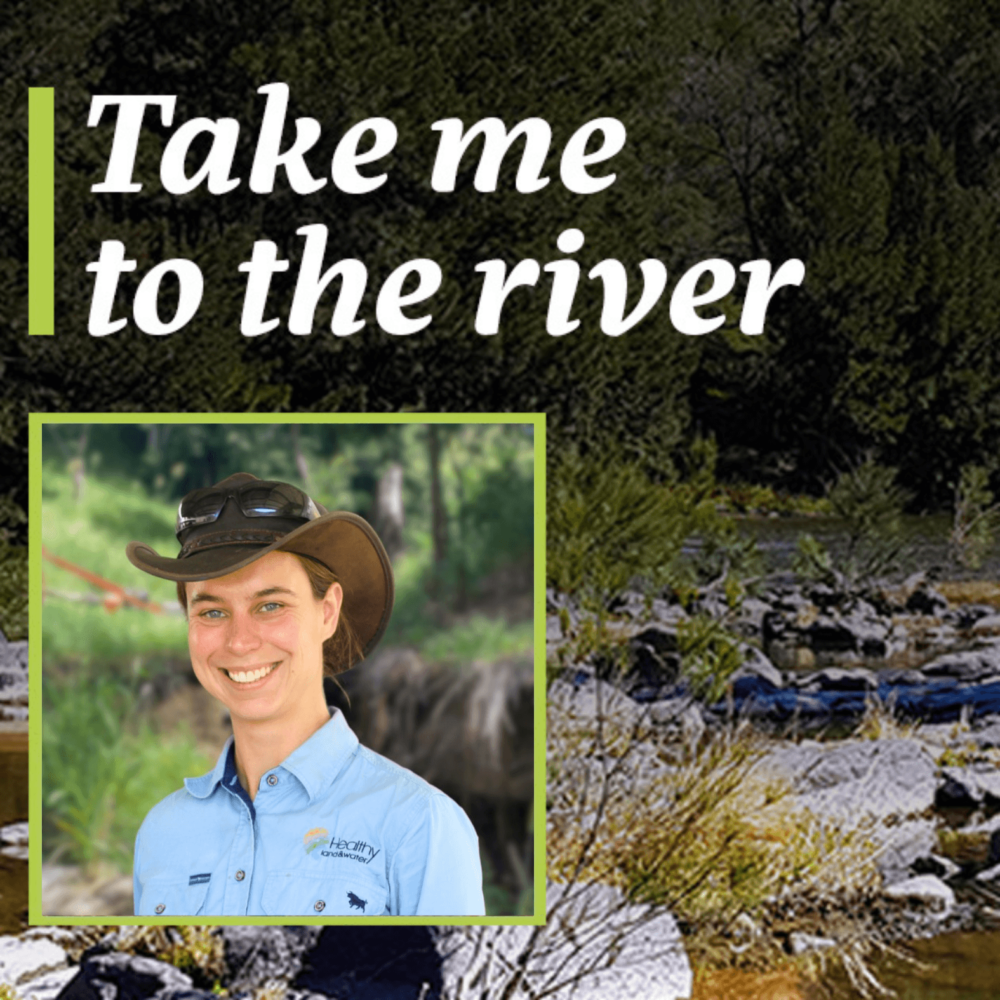
Episode37How mangroves are saving Queensland’s Caboolture River
In today’s episode, Margie Dickson, Environmental Project Manager at Healthy Land and Water, takes us on a journey through her experience leading an innovative project on the Caboolture River which re-establishes mangroves for long-term bank stabilisation and ecosystem resilience. This effort combines her engineering expertise with nature-based solutions, including the use of hardwood logs, strategic earthworks and mangrove revegetation to combat erosion. The project is not only addressing critical environm

Episode36Harmonising waters: water management, innovation and choral singing
Michael Wilson has an extraordinary range of backgrounds: he’s a political scientist, classical musician, public servant, national security specialist, Australian Diplomat, and Humanitarian and International Development Advisor all rolled into one, with over 35 years’ experience across these fields. He’s run for parliament, negotiated international environmental treaties, and trained as a classical baritone opera singer.

Episode35Stocky Needs Our Help: Saving native freshwater fish from extinction
Fish ecologist Dr. Mark Lintermans discusses the fight to save the Stocky Galaxias, a critically endangered tiny fish native to Kosciuszko National Park. From emergency responses to the Black Summer bushfires to genetic diversity strategies and community collaboration, the episode explores both the Stocky's precarious future and the broader crisis facing Australia's freshwater fish species.

Episode34The Power of Visual Storytelling
Marine scientist turned graphic recorder Dr. Sue Pillans discusses the power of visual storytelling, tracing her path from ocean research to real-time illustration for over 65 organisations across Australia and Southeast Asia. The conversation also explores her alter ego "Dr. Suzie Starfish," her children's books about ocean conservation, and how creative communication can reach diverse audiences including First Nations communities.

Episode33Reviving Queensland’s Mary River (and Great Barrier Reef)
Environmental engineer Misko Ivezich discusses a landmark Mary River restoration project that cut bank erosion by 85% during the 2022 floods through innovative engineering and revegetation. The work has meaningfully benefited threatened species including the Mary River Turtle and Lungfish, demonstrating how science, policy, and community collaboration can drive lasting ecological recovery upstream of the Great Barrier Reef.
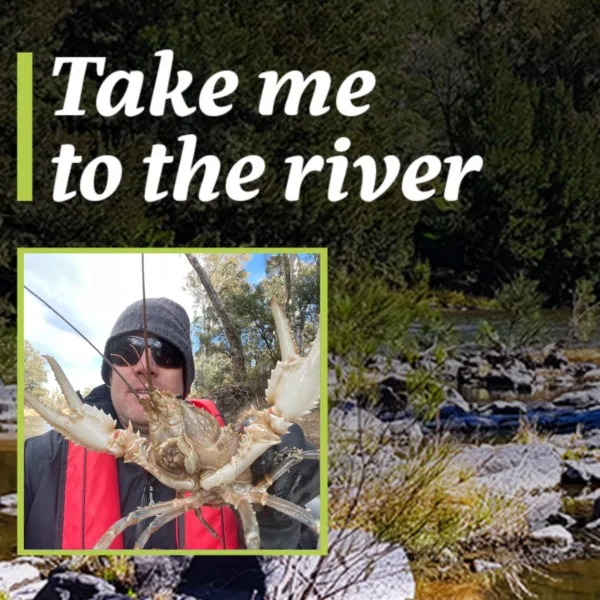
Episode32Saving Freshwater Species
Fetched: Saving Freshwater Species with Dr. Nick WhiterodFreshwater ecologist Dr. Nick Whiterod, Science Program Manager at the Coorong, Lower Lakes and Murray Mouth Research Centre, makes the urgent case for action on Australia's freshwater species crisis. With native fish populations at less than 10% of pre-colonisation levels, he draws on over two decades of conservation work, including successful reintroduction projects and national listings of more than 50 freshwater fish and crayfish species.

Episode31Why your pet fish doesn’t belong in the river
What if your pet fish could wreak havoc on Australia’s ecosystems? Turns out, that’s precisely what they’ll do if they end up in our waterways. In today’s episode, Dr. Siwan Lovett sits down with freshwater fish biologist Dr Mariah Millington, who reveals the surprising capacity for non-native pet fish to damage and degrade Australia’s freshwater ecosystems, and particularly the native fish that live within them.
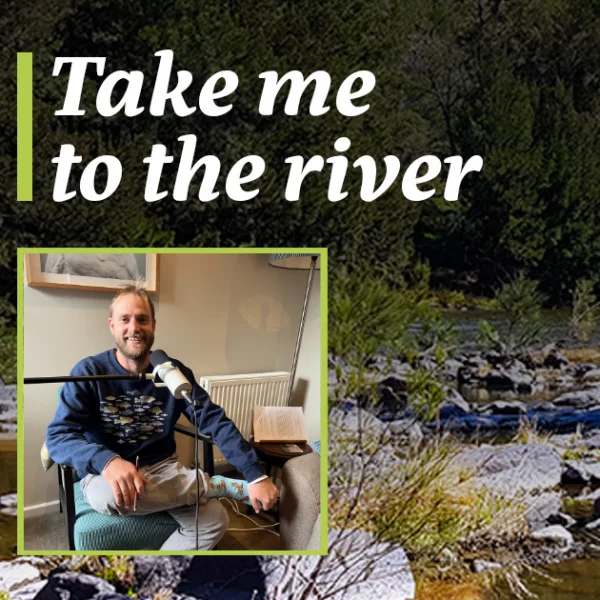
Episode30Water bugs, water quality, platypus and natives
Searched the webJed Pearson from the Rivers of Carbon team explores what it takes to restore a river to health, from riparian vegetation strategies and erosion control to the surprising world of macroinvertebrates. The episode covers the critical role these tiny water bugs play as ecosystem indicators and platypus food, and celebrates citizen science through the Waterwatch program as a tool for monitoring water quality.

Episode29The Future of The Forgotten River
The Upper Murrumbidgee River ran completely dry at Tharwa in 2019, and the Forgotten River campaign has since secured a $50 million funding agreement. But the river still urgently needs more water, with Tantangara Dam capturing up to 99% of its headwaters. The episode examines what the funding could mean and what a small group of passionate people can achieve.

Episode28 Why Mentoring Matters
The value and unexpected rewards of mentoring take centre stage as two alumni of the 2023 Waterway Management Emerging Leaders Program share their experiences, one as a mentor and one as a mentee for the first time. The conversation covers personal and professional growth, some genuinely surprising moments, and why mentoring is seen as a vital pathway for effective waterway and natural resource management.

Episode27 The Magic of Mentoring
17:10Two alumni of the Waterway Management Emerging Leaders Program reflect on their mentor and mentee experiences, the ways the program challenged and surprised them, and its lasting impact on their work. The conversation also ventures into the practicalities of willow removal, the Woady Yaloak catchment system, and what motivates people working in waterway management.

Episode26Being part of a larger story
Recorded by the banks of the Cotter River, this is a candid and wide ranging conversation with ACT Independent Senator David Pocock, from his upbringing in Zimbabwe and career in professional rugby to what drives him as an environmental advocate in the Senate. The discussion turns to the Upper Murrumbidgee, a river left behind by water management reforms, where the Snowy Hydro Scheme captures up to 99% of its headwaters and nearly dried it up entirely in 2019.

Episode25Saving Australia’s native fish
Freshwater fish ecologist Dr. Wayne Koster shares his research on native fish recovery across Victoria and south-eastern Australia, with a particular focus on movement and spawning ecology. The conversation explores how environmental flow recommendations can restore suitable conditions for fish in regulated rivers, and what understanding habitat requirements really means for the long-term conservation of riverine species.

Episode24Meet the Commonwealth Environmental Water Holder
Siwan sits down with Australia’s Commonwealth Environmental Water Holder (CEWH), Dr. Simon Banks, to talk about his love of nature, his experience delivering eWater, and what it’s like to be the CEWH. This conversation covers Dr. Banks’ journey so far, some elements of the Murray-Darling Basin Plan, whether Australia is a world-leader in environmental water management, and more.

Episode23Country is crying out for good people
A Dabee man of the Wiradjuri nation, river guide, and Invasive Species Council ambassador, Richard Swain speaks from deep personal and cultural knowledge about what it means to care for Country. Ranging across advocacy, feral animal impacts, and the cultural divide between Indigenous and non-Indigenous Australians, this is a hard-hitting conversation that challenges and provokes, all in service of a shared lore of restoration.

Episode22Country Speaks
Regenerative agriculture pioneer Dr. Charles Massy brings decades of farming, science, and writing together in a rich conversation about restoring Country. Drawing on his work at Severn Park, his book Call of the Reed Warbler, and recent efforts on the Snowy River, this episode explores the profound connection between healthy soil, healthy landscapes, and a new way of thinking about how we live on and with the land.
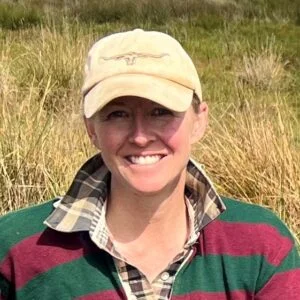
Episode21Why Regenerative Farming Helps Our Waterways
Recorded on the banks of the Wollondilly River near its headwaters, this episode visits fifth-generation regenerative farmer Felicity Wheelwright at Roslyn Estate near Goulburn. Felicity shares how 30 years of restoration work, including a 17 kilometre native tree corridor and holistic grazing, has transformed her property, and how her background in banking and business informs her approach to farming for both productivity and Country.
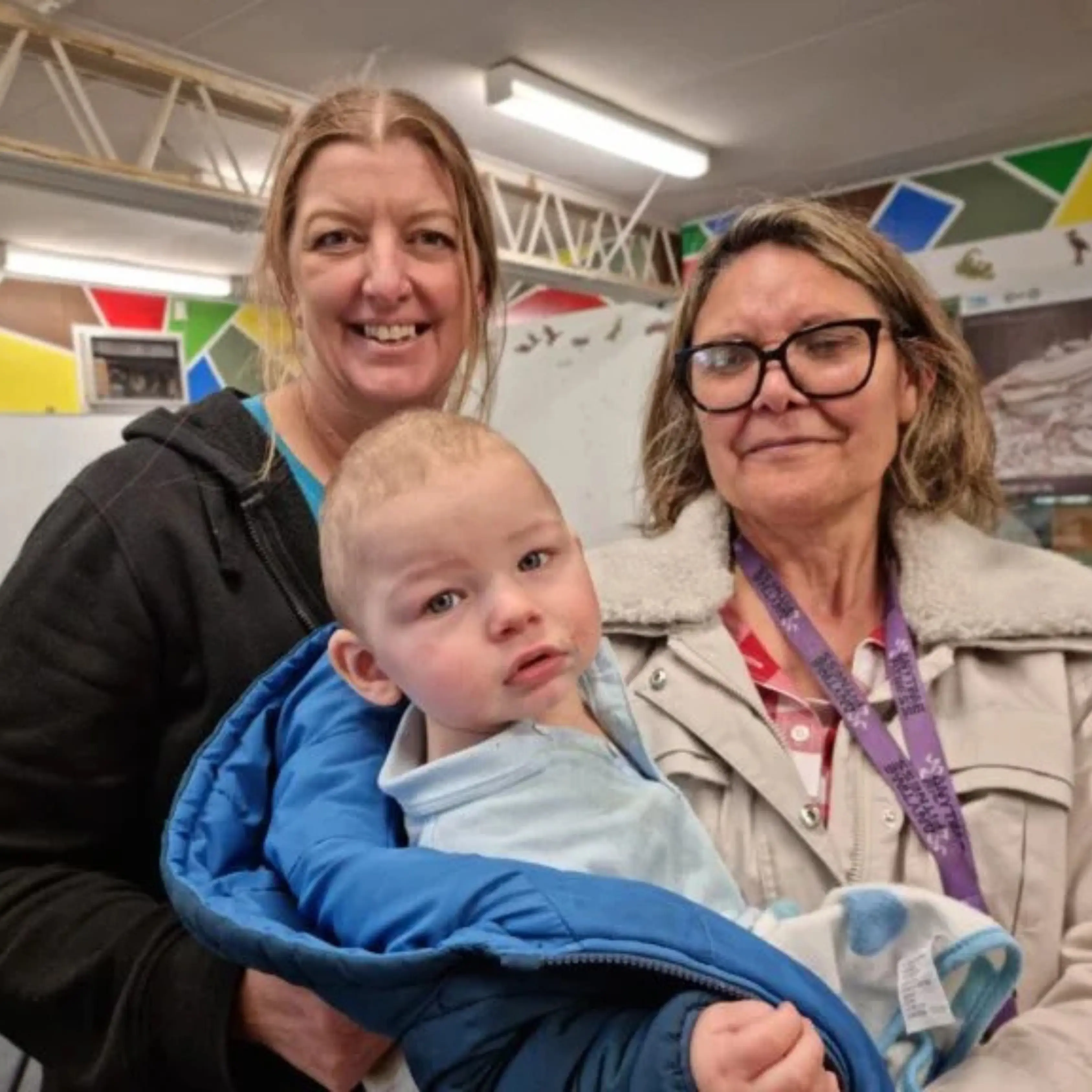
Episode20Healing and Connection to Country with Yarning Circles
Tanya Keed, a proud Aboriginal woman from Dunghutti Country, and Lori Gould share their deeply personal work connecting incarcerated men and women back to themselves, each other, and to Country. A conversation unlike any other on this podcast, generous in spirit and rich in story, offering a rare and moving insight into what it means to belong to Country.
Episode19What happens to freshwater systems during floods?
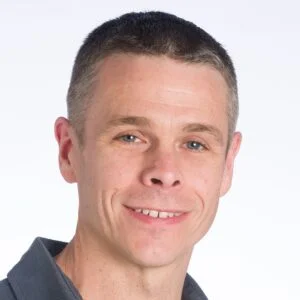
Freshwater ecologist Associate Professor Angus Webb breaks down what the recent Goulburn River floods mean for the ecology of the system, drawing on his role leading the Flow Monitoring, Evaluation and Research Program for the lower Goulburn. The conversation explores how flooding shapes freshwater ecosystems and what it reveals about the way we manage our rivers.

Episode18Why Science and People Matter for Australian Rivers
Freshwater scientist Professor Fiona Dyer explores the diversity of Australia's riverscapes and what that complexity means for making good water management decisions. Drawing on her expertise across vegetation ecology, water quality, and ecohydrology, the conversation makes the case for why both science and people are essential to understanding and caring for our rivers.

Episode17River Dreaming and Reconciliation
A proud man of the Kamilaroi and Ngunnawal nations, Richie Allan speaks about what reconciliation truly means and why Indigenous perspectives are essential to how we understand and care for our rivers. The conversation explores how individual and organisational actions can contribute to a shared path of recognition, respect, and reconciliation between Australia's past and its future.

Episode16How Anglers Are Protecting Native Fish and the Waterways They Call Home
An avid angler with over 40 years fishing the Canberra and Snowy Mountains regions, Andrew McGovern makes the case for why anglers are among our most passionate river defenders. The conversation covers sustainable catch and release practices, the special connection fishers have with native species, and how time spent on the water can translate into a lifetime of conservation.

Episode15The Sound of Water: Why Should We Be Listening in to Wetlands?
Freshwater ecologist Dr. Skye Wassens and design Professor Mitchell Whitelaw share their remarkable Sounds of Water project, which captures and visualises the acoustic life of the Nap Nap swamp wetlands as environmental flows arrive from the Murrumbidgee. From Southern Bell frogs to native animals responding to returning water, the episode makes a compelling case for listening as a powerful way to understand and connect with wetland ecosystems.

Episode14Bringing the Whole Person into the Workplace
Facilitator and coach Belinda Chapman makes the case for why people working in river management need to bring their whole selves to work, not just their technical expertise. The conversation explores what it means to engage head, heart, and gut in the workplace, and how developing emotional intelligence can transform the way practitioners connect and work with their stakeholders.

Episode13How Raising the Warragamba Dam Wall Would Erase Indigenous Heritage
Gundungurra Elder Kazan Brown speaks with quiet urgency about what raising the Warragamba Dam wall by up to 17 metres would mean for her people. The proposal threatens 5700 hectares of UNESCO World Heritage listed national park and 1541 cultural sites in the Burragorang Valley, some thousands of years old. For a people who survived the first dispossession when the valley was flooded in the 1940s, this is a conversation about what it means to lose Country twice.
Episode12Why Raising the Warragamba Dam Wall Raises Serious Concerns
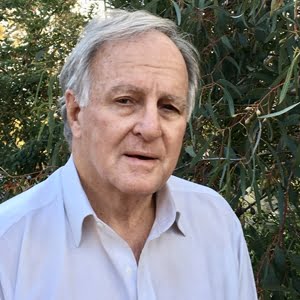
Former NSW Minister for the Environment Bob Debus unpacks the deeply flawed case for raising the Warragamba Dam wall, challenging the claim that a higher wall would meaningfully protect flood-prone communities in Western Sydney. The conversation covers the 6000 hectares of World Heritage listed national park at risk, the more than 1500 Gundungurra cultural sites under threat, and a pointed question about whether State, Federal, and international legal protections can simply be set aside when they become inc

Episode11Why the Murrumbidgee River Wrote a Letter to Canberra
Andy Lowes, author of the Letter from the Murrumbidgee River to Canberrans, is Canberra born and bred, growing up swimming, fishing and walking by the Murrumbidgee. In this episode, Siwan and Andy discuss how the letter helps explain the changes the river has seen in its ecology and the way people interact with it, and reinforces the need for immersing ourselves in nature.

Episode10What Motivates Curious People to Become Climate Leaders?
Author and science broadcaster Rod Taylor brings his book Ten Journeys on a Fragile Planet to the conversation, sharing the stories of ten Australians confronting climate change in remarkable ways. The discussion ranges across the role of people, technology, and political institutions in addressing the climate crisis, and turns to a question both Rod and Siwan grapple with personally: how do you hold onto hope, and what does curiosity have to do with it?
Episode9Why Is Thinking About the Future Hard?
Associate Professor Lorrae van Kerkhoff explores why thinking about the future is so genuinely difficult, including the fascinating idea that we tend to imagine our future selves as strangers. Drawing on her multidisciplinary approach to complex environmental and water problems, the conversation digs into futures thinking, creativity in problem solving, and the adaptive capacity we will all need to navigate an uncertain world.
.png)
Episode8Is Raising Dam Walls an Effective Strategy to Manage Climate Change Impacts?
Professor Jamie Pittock, member of the Wentworth Group of Concerned Scientists and former WWF staffer, takes a hard look at the proposal to raise the Warragamba Dam wall and finds the rationale wanting. The conversation examines whether a multi-million dollar flooding solution will actually protect downstream communities, and weighs the ecological and cultural consequences of a proposal that may cause far more harm than it prevents.
.png)
Episode7Retaining Hope in the Face of a Changing Climate
As Vice Chair of the IPCC and one of the world's leading climate scientists, Professor Mark Howden has spent thirty years studying climate variability, change, and adaptation. Rather than dwelling on despair, this conversation turns to a more personal and pressing question: where do we find the skills and the hope we need to face what is coming, and how do we look to each other to get there?
.png)
Episode6Their Stories: Professor Ross Thompson
From a brief medical career to leading water science, this conversation brings warmth, humour, and systems thinking to the challenge of environmental flows in the Murray Darling Basin. The discussion covers how to deliver water for maximum ecological benefit, the value of interdisciplinary thinking, and how science operates within the messy reality of politics, society, and economics. Expect laughs, and at least a few good-natured digs at the guest's New Zealand heritage.
.png)
Episode5What Makes a River Champion and Why Are They So Important?
Not all river champions are the loudest people in the room. This conversation explores a quietly radical idea: that the most effective drivers of change in river management are often humble, well-connected people working behind the scenes, building social capital and bridging scales of management. The discussion unpacks what it truly means to champion a river, and why recognising and supporting these people within and beyond institutions matters so much for the future of our waterways.
.png)
Episode4Bouncing Forward
The popular idea that resilience means bouncing back turns out to be flawed. After a bushfire, a pandemic, or any transformative experience, we emerge with knowledge and lived experience we simply did not have before. Going back is impossible. This conversation explores what it means to bounce forward instead, and how that shift in thinking can help us build genuine resilience in ourselves and the communities we are part of.
.png)
Episode3Take Care to Give Care
After months of bushfires and a global pandemic, Australians have been living in a state of prolonged anxiety and fear. This warm and honest conversation explores a practical framework for building resilience through Awareness, Balance, and Connection, drawn from a guide originally created for wildlife carers but deeply relevant to all of us. A gentle reminder that caring for others starts with caring for yourself.
.png)
Episode2Saving Stocky
While bushfire images of koalas and kangaroos captured the nation's attention, a quiet rescue mission was underway for one of Australia's least known and most endangered fish. This episode tells the story of a team who trekked into smoky mountain terrain to save 142 Stocky Galaxias from the devastating aftermath of the Black Summer fires, and asks a harder question: who speaks up for the species nobody has heard of?
.webp)
Episode1Container Love
A deeply personal opening episode reflecting on the emotional weight of the Black Summer bushfires and the ecological grief so many Australians were carrying. The conversation turns to how small acts of compassion, like leaving water out for wildlife, can be a way of holding onto hope in ourselves, each other, and the natural world we love.
Support us with a donation
Take Me to the River is produced in-kind by a small team of dedicated people. We are proudly supported by the donations of generous listeners like you. If you enjoy the show and value our contributions to important conversations about Australia’s waterways, please consider supporting us by donating to the Australian River Restoration Centre.
Your donation helps us bring you more episodes, more often, with a wider variety of guests and topics. You’ll also be supporting our critical work restoring Australia’s waterways, protecting our clean drinking water, restoring habitat for wildlife, and preserving the social, economic and cultural values that our rivers uphold.
Stay connected to the rivers you love
Sign up to our monthly email newsletter and be the first to see inspiring stories, practical resources, and ways to make a real difference for our waterways and the native species that depend on them.
Be a part of our community 💚

The ARRC acknowledges the Country we live on
We acknowledge and respect Aboriginal and Torres Strait Islander Peoples as the Traditional and Continuing Custodians of Country. We respect and learn from Elders past, present and emerging, valuing their knowledge, insights, cultures and connections to the waterways we love and care for.
Our Reflect Reconciliation Action Plan promotes a reconciled Australia by supporting and empowering Aboriginal and Torres Strait Islander voices and experience in the work we do to restore and protect our waterways. We make every effort to involve First Nations collaboration and partnerships in all our on-ground projects.
Support our work
There are multiple ways to show your support for what we do.
Choose your own adventure.
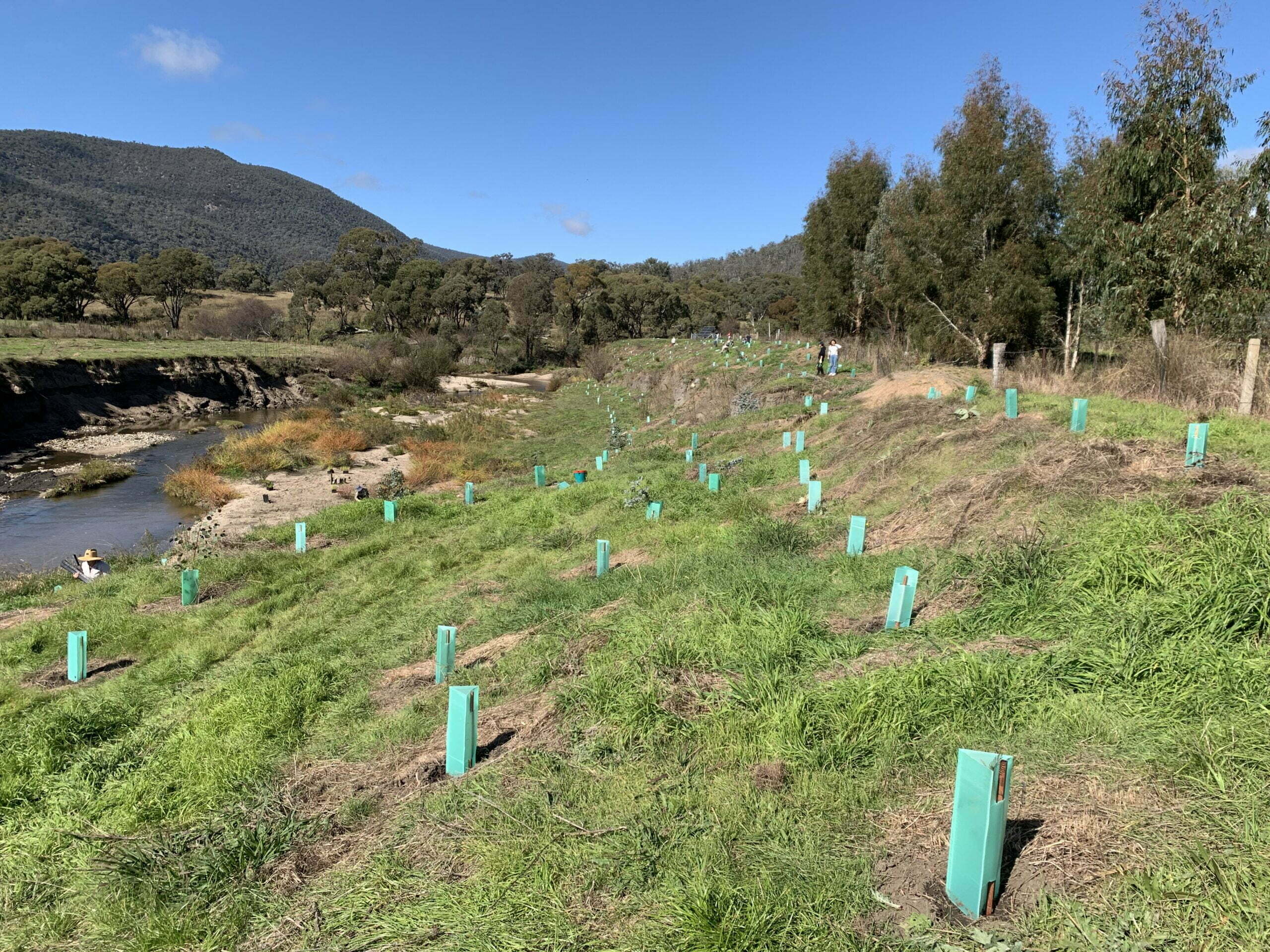
Every donation makes an impact.
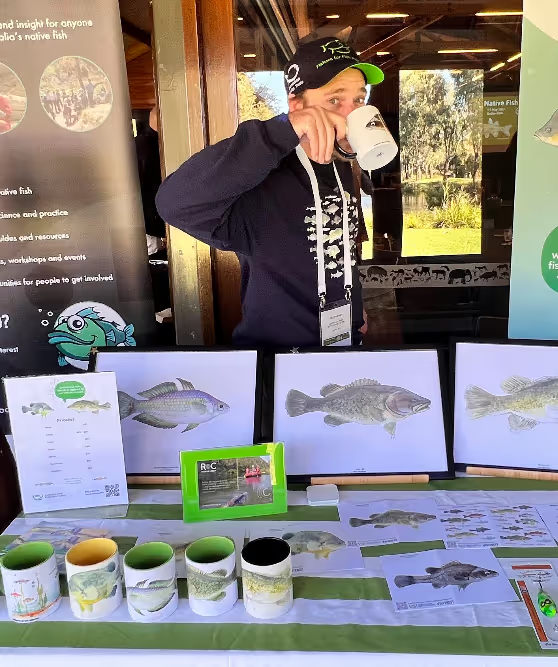
100% of proceeds go directly towards our work restoring rivers.
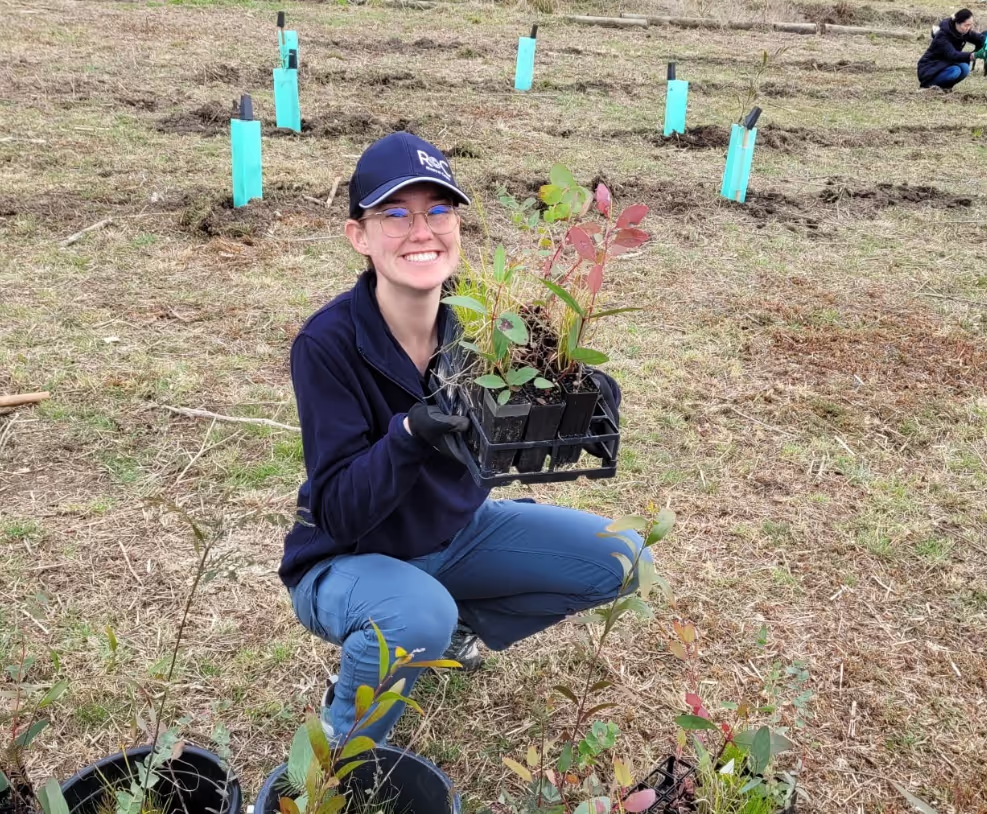
Join us at an upcoming planting day or community event.
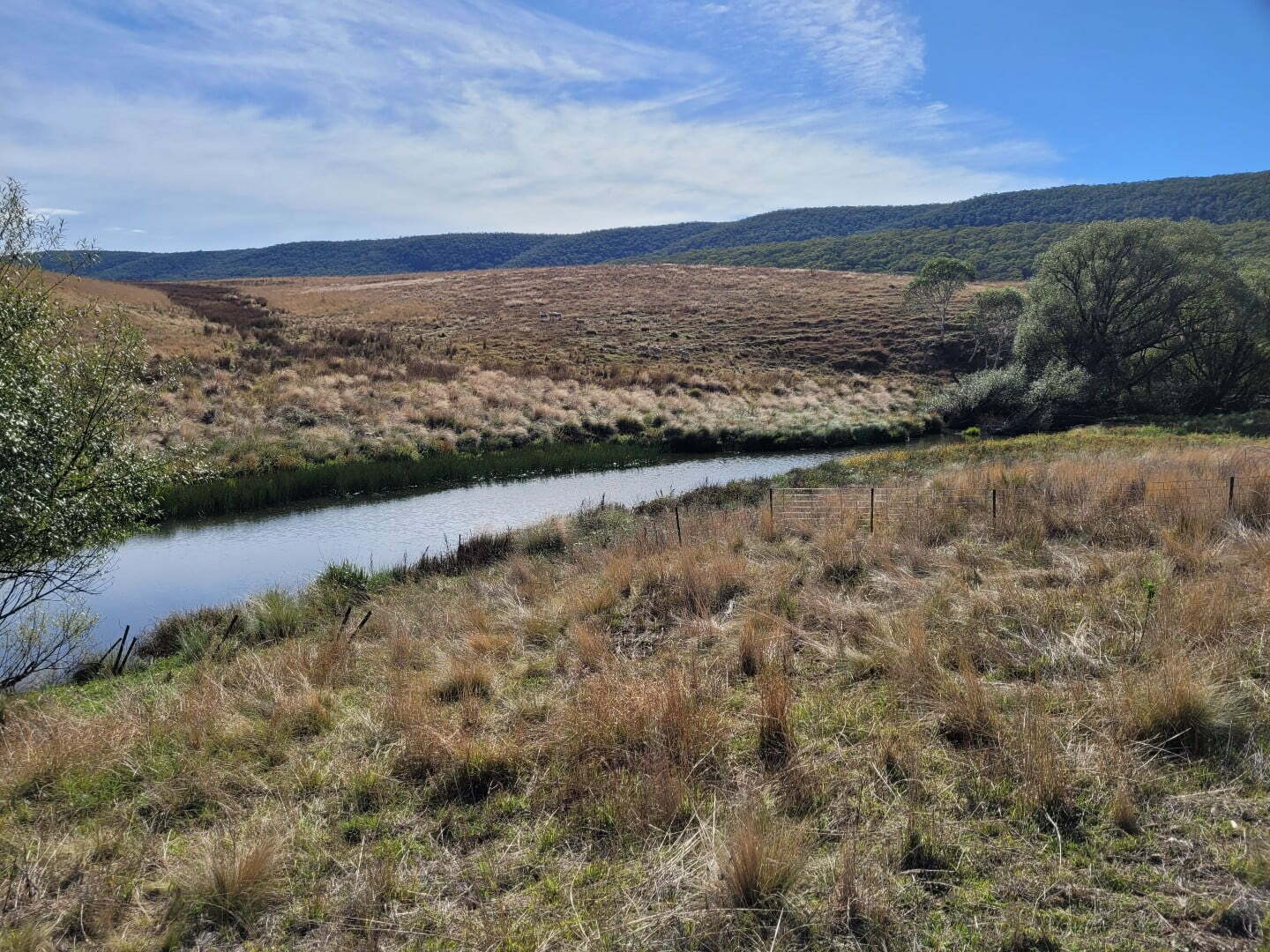
Collaborate with us on a range of projects, working to restore our rivers together.
Work with us to achieve sustainability goals and make a positive environmental impact.