
.webp)
First Nations Peoples and Knowledge

Acknowledgement
We acknowledge and respect Aboriginal and Torres Strait Islander Peoples and recognise their continuing connections with, and knowledge about, land, waters, and community. We pay our respects to their Elders and their cultures, who have nurtured our beloved waterways for many generations. We hold in high esteem the wisdom of these cultures, whose profound knowledge, insights and spiritual ties to the rivers we cherish guide and inspire our work. Their enduring connection to these waterways enriches and informs our efforts as we walk alongside them on the path of reconciliation.
Although ARRC is not an Indigenous Australian organisation, we wish to honour, uplift and promote First Nations Peoples' long-standing connection to the waters that nourish our communities, economies and landscapes. First Nations Peoples are essential partners in our quest to restore rivers, wetlands, creeks and billabongs.
We do this in the three core areas of ARRC’s work:
On-ground river restoration
- We acknowledge First Nations Peoples as the original custodians of Australia’s lands and waters and recognise their enduring cultural and spiritual relationships with rivers and Country.
- We frame all our river restoration work as guided and inspired by First Nations knowledge and stewardship.
- We prioritise personal relationships with local First Nations Peoples in the regions where we work.
- We seek advice on culturally significant places and appropriate ways to engage, and we follow the guidance of local Elders and knowledge holders.
- We provide practical, economic and emotional support for First Nations Peoples and businesses, and we use our platform to centre Indigenous perspectives in river restoration.
In action: Cultural talks and walks
Aaron Chatfield, is a Gamilaraay man with strong connections to Ngunnawal country who closely works with us providing cultural talks and walks, as well as working on with his team of trainees to build fences, plant native vegetation, manage weeds and erosion.
Yass Field Day with Aaron
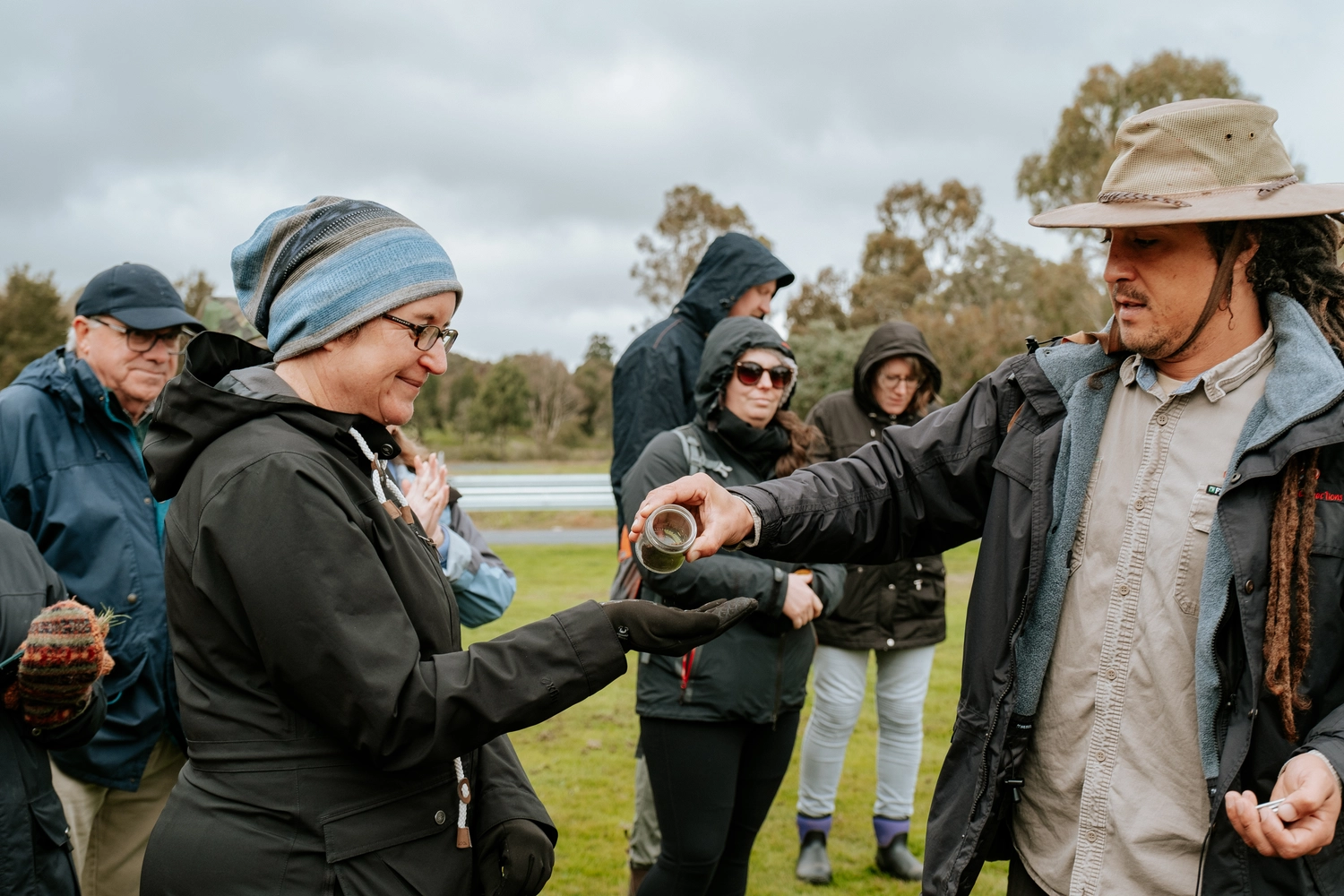
Aaron Chatfield at our Yass field day. Credit: Phoebe Watkins.
Building knowledge and capacity
- We undertake formal cultural-competency training (such as the Aboriginal and Torres Strait Islander Core Cultural Learning modules).
- We reflect on concepts such as positionality and avoid deficit discourse, committing to lifelong learning to reduce the cultural load carried by Indigenous people.
- We share facts about First Nations water management - such as cultural flows, pre-colonial water systems, and current inequities in water rights, to educate the wider public.
- We provide resources and links to encourage others to begin their own cultural learning journey and to use respectful, accurate language.
In action: First Nations storytelling
Kalari Bila (Lachlan River) Storybook – we are part of a team collecting stories from mob who live along the Kalari Bila (Lachlan River). This work is being led by Isabel Goolagong, a Wiradjuri woman from Kalari Bila country who is a Cultural Advisor with the Flow-Monitoring Evaluation and Research Program and Dr Will Higgisson from the University of Canberra. We also created the 'Rivers, the veins of our Country' web pages to promote First Nations storytelling by First Nations Peoples.
Learn more about Rivers, the veins of our Country
.webp)
Isabel at the Aboriginal Water Entitlements Program in Dubbo, May 2025 (photo credit: Karen Keed).
Advocacy
- We aim to uplift and promote First Nations voices in natural resource management.
- We raise awareness of systemic inequities in water access and rights for First Nations Peoples.
- We advocate for the inclusion of cultural flows and Indigenous leadership in water governance.
- We collaborate with Indigenous partners to ensure their knowledge and priorities inform the policies and programs that affect their Country.
In action: Formal inclusion in water management decision-making
Through our Forgotten River campaign we worked alongside local First Nations Peoples to ensure their voices and knowledge shaped every stage of advocacy for the Upper Murrumbidgee.
This advocacy has resulted in $500,000 being allocated specifically for First Nations participation in the Upper Bidgee / Snowy Water Inquiry Outcomes Implementation Deed (SWIOID) review process. It means that First Nations voices can be actively heard and supported in decision-making for the river. We continue to call for First Nations Peoples to be formally included in all water management decisions, so that rivers can be restored with the wisdom of those who have cared for them since time immemorial.
Read the full update on the funding package announcement
.webp)
Richie Allan, Bradley Bell, Dr. Siwan Lovett, Sen. David Pocock, Andy Lowes (left to right) announcing $50 million in funding secured for the Upper Murrumbidgee.
Learning from and with First Nations Peoples: A cultural learning journey at ARRC
Evidence of pre-colonial Indigenous Australian water management exists in many forms: from ancient fish traps and shell middens to stories, language and songlines passed down through generations. These are not just remnants of the past but living expressions of deep and enduring relationships with rivers and Country. Water-dependent cultural values—such as creation sites, food and tool resources, burial and meeting places, and language—are central to the health and identity of First Nations Peoples. When water disappears, so too can language and culture (Moggridge et al., 2019).
Despite this rich knowledge and connection, First Nations Peoples remain one of the most marginalised groups in Australian water management. While they hold rights to around 40% of Australian land through native title, they own and control less than 0.2% of the water.
The United Nations Declaration on the Rights of Indigenous Peoples, adopted in 2007, reinforces the right of Indigenous Peoples to maintain and strengthen their spiritual relationship with water and Country (Article 25) and to give free, prior and informed consent on projects affecting those resources (Article 32.2).
.webp)
Walking our talk at the ARRC
The confronting truth is that the colonisation of Australia involved widespread violence against First Nations Peoples, including more than 400 documented massacre sites between 1788 and 1930. Thousands of men, women and children were killed, often with the knowledge or support of colonial authorities. These acts of violence are not just historical facts; they are part of a legacy of trauma that continues to shape the lives, lands and waters of First Nations Peoples today.
At the ARRC, we do not turn away from this history; we carry it with us. Understanding the truth of massacre sites and the violent dispossession of First Nations Peoples deepens our commitment to working in ways that are respectful, relationship-based, and led by local communities. We recognise that healing Country is inseparable from healing culture and truth-telling, and we are learning to walk alongside First Nations Peoples with humility, care and a willingness to listen. This history reminds us that restoring rivers also means restoring justice.
View our Reflect Reconciliation Action Plan here.
At the ARRC, we have committed to beginning and continuing our own cultural learning journeys. One key step has been completing the Aboriginal and Torres Strait Islander Core Cultural Learning modules. This learning has helped us develop deeper self-awareness, reflect critically on our roles, and build the skills to engage more respectfully in intercultural spaces.
Cultural learning not only strengthens our work but helps reduce the cultural load often placed on Indigenous people in natural resource management spaces. Below are a few things we've learned along the way, including questions we asked ourselves and some resources you can explore if you're starting your own journey.
What is cultural competency?
Cultural competency is the ability to interact effectively and respectfully with people from different cultural backgrounds. The cultural learning modules challenged us to reflect on our positionality—the way our own background, identity and experiences shape how we see the world.
Another important concept is deficit discourse: the tendency to focus on perceived shortcomings or problems in Indigenous communities, rather than recognising strength, resilience and deep cultural knowledge. At ARRC, we are working to move away from this way of thinking and instead centre respectful, strength-based approaches in all our communications.
.jpeg)

Common questions we asked ourselves – and still do!

Commonly accepted terms include Aboriginal and Torres Strait Islander People(s), First Australians, First Nations Peoples, and Indigenous Australians. At ARRC, we use First Nations Peoples. It's always best to ask what term an individual or community prefers.
Before colonisation, there were over 250 distinct languages and 600 dialects across the continent. Today, many are being revitalised despite historic and ongoing loss. We are currently in UNESCO's International Decade of Indigenous Languages. Explore languages via AUSTLANG.
Cultural flows are water entitlements legally and beneficially owned by Indigenous nations. As defined in the Echuca Declaration (MLDRIN, 2007), they are intended to improve the spiritual, cultural, environmental, social and economic conditions of Indigenous Peoples. Learn more here.
Colonisation in Australia refers not only to the historical taking of land, but to the ongoing effects of displacement, policy, and marginalisation. A helpful explainer can be found at Common Ground.
Capitalising words like First Nations, Country, Peoples, and Indigenous shows respect for identities, cultures and knowledges long denied by dominant systems. For example, capitalising "Peoples" acknowledges the diversity and sovereignty of many nations across the continent.
History impacts us all. Understanding where we come from and the systems we are part of is key to working towards a more just, respectful and reconciled Australia.
Start by learning, listening and supporting Indigenous-led initiatives. Here are a few great places to begin:
Stay connected to the rivers you love
Sign up to our monthly email newsletter and be the first to see inspiring stories, practical resources, and ways to make a real difference for our waterways and the native species that depend on them.
Be a part of our community 💚
The ARRC acknowledges the Country we live on
We acknowledge and respect Aboriginal and Torres Strait Islander Peoples as the Traditional and Continuing Custodians of Country. We respect and learn from Elders past, present and emerging, valuing their knowledge, insights, cultures and connections to the waterways we love and care for.
Our Reflect Reconciliation Action Plan promotes a reconciled Australia by supporting and empowering Aboriginal and Torres Strait Islander voices and experience in the work we do to restore and protect our waterways. We make every effort to involve First Nations collaboration and partnerships in all our on-ground projects.
Support our work
There are multiple ways to show your support for what we do.
Choose your own adventure.
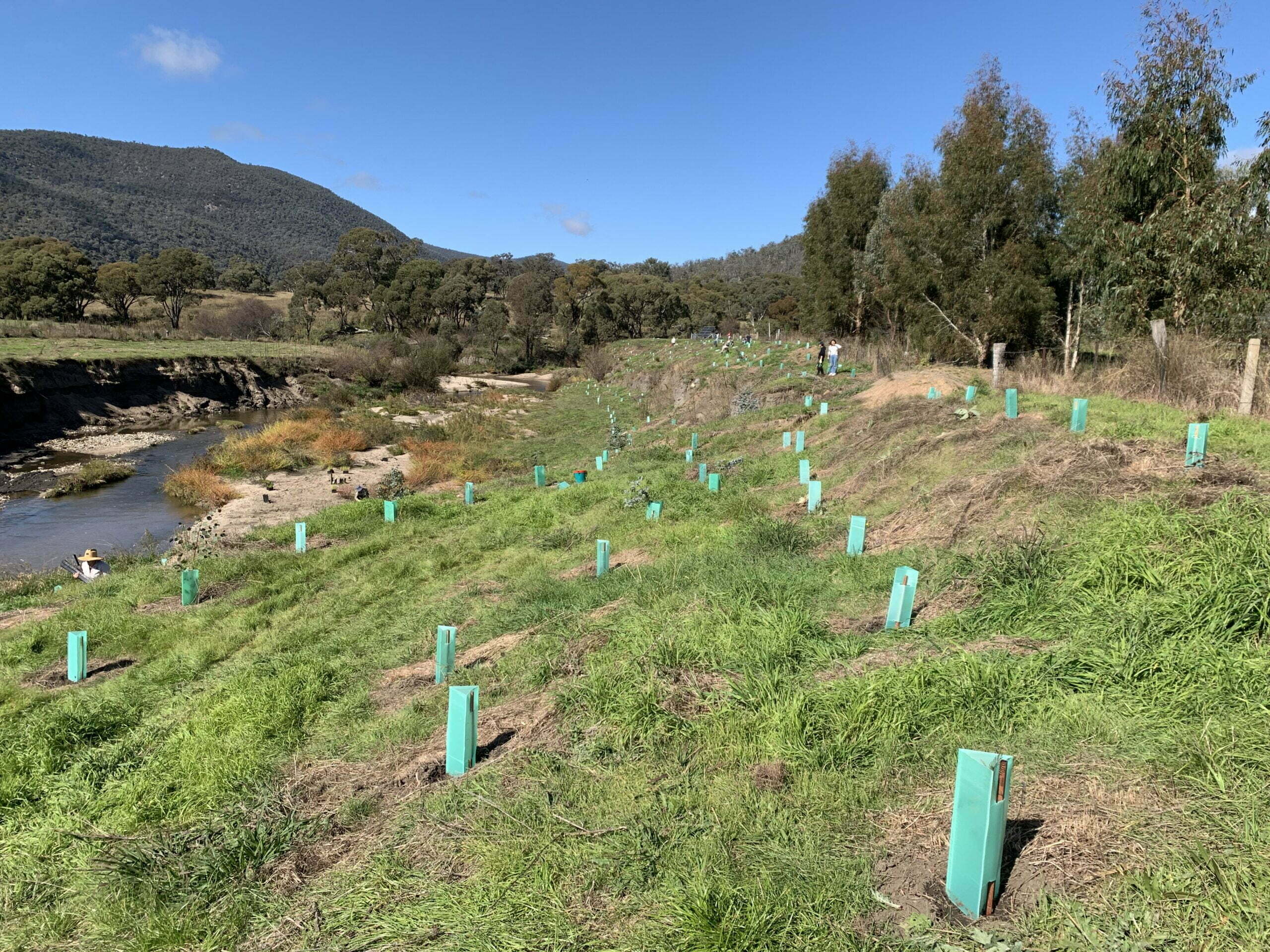
Every donation makes an impact.
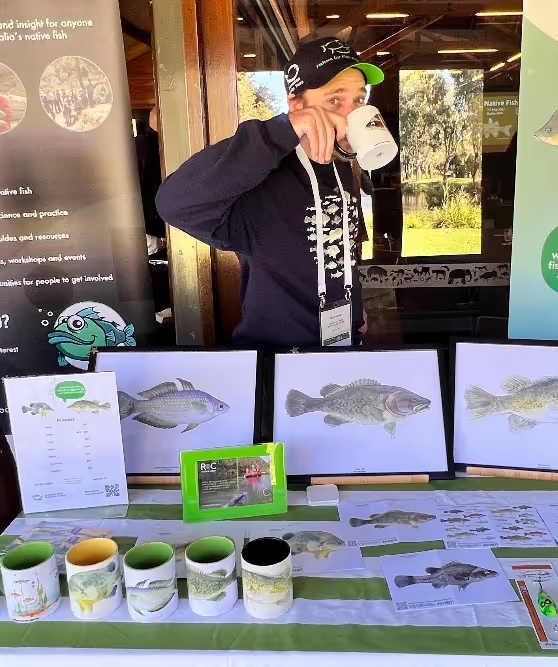
100% of proceeds go directly towards our work restoring rivers.
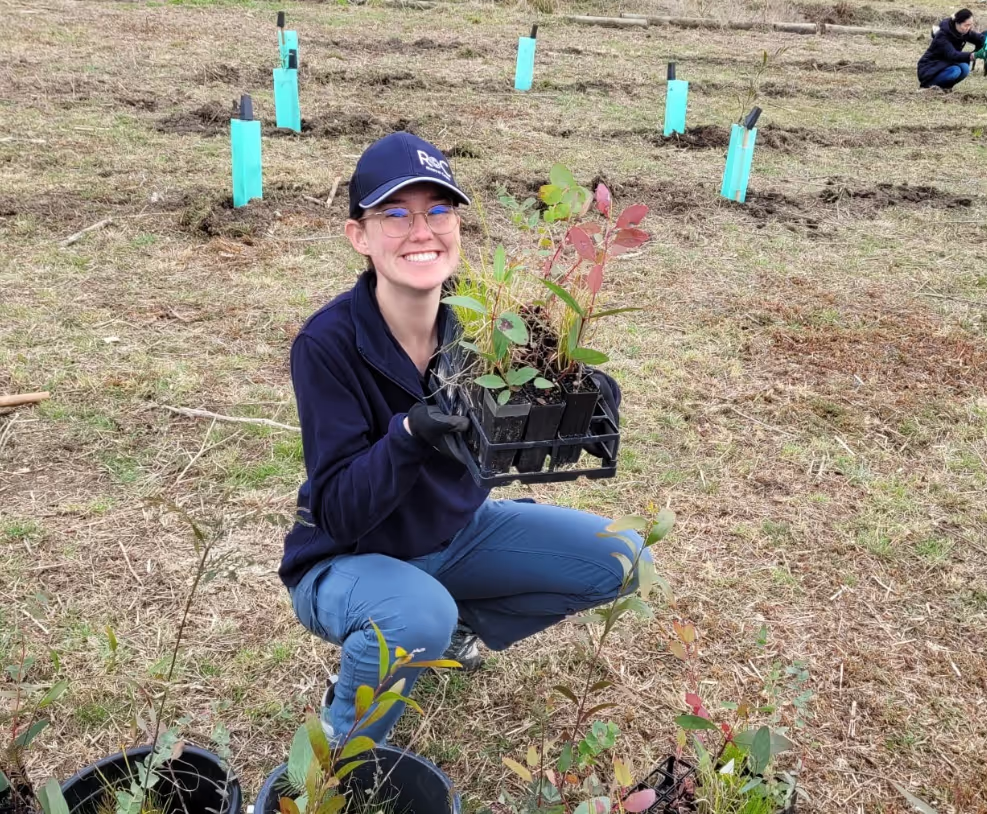
Join us at an upcoming planting day or community event.
Collaborate with us on a range of projects, working to restore our rivers together.
Work with us to achieve sustainability goals and make a positive environmental impact.