
Episode:2Saving Stocky
Guests:Mark Lintermans, Freshwater Fish Ecologist, University of Canberra
While bushfire images of koalas and kangaroos captured the nation's attention, a quiet rescue mission was underway for one of Australia's least known and most endangered fish. This episode tells the story of a team who trekked into smoky mountain terrain to save 142 Stocky Galaxias from the devastating aftermath of the Black Summer fires, and asks a harder question: who speaks up for the species nobody has heard of?
.png)
Show Notes
Researchers dash to save Stocky and his mates…
Over the past few months we have seen the devastation bushfires have caused across many of our beautiful forests – photographs of dead and injured koalas, kangaroos and echidnas have been upsetting, galvanising people to knit booties, put out water and fund food drops for wildlife. But what of those less charismatic species, the ones that are rarely seen, yet have just as much claim to being saved as any other species? Who is looking out for them?
In pools, creeks and rivers across Australia are native fish that are small, unique and hard to find. As a result, we don’t know a lot about them, but Associate Professor Mark Lintermans has dedicated his career to understanding the fish that most Australians know little about. Over the past few weeks Mark, along with colleagues from the University of Canberra and the NSW Department of Primary Industries, has been trekking into the bush, with Rural Fire Service escort, to catch and rescue fish not so much threatened by the fires, but by the impact of ash and debris being washed into their mountain homes once rain arrives.

Listen to the podcast episode below or on Spotify (click here) as Mark tells the story of ‘Saving Stocky’ – and read on to find out more about this special little fish.
Resources:
- Stocky Galaxias Info Page: Department of Primary Industries
- Short-tail Galaxias Info Page: Fishes of Australia
- Climbing Galaxias Info Page: Fishes of Australia
- Freshwater hell: scientists race to save endangered fish from bushfire ash
- Australian bushfires disrupt research projects but reveal new studies
- Despised fish casts spanner in works of huge Snowy 2.0 scheme
- Feral horses are destroying fragile post-fire habitat in the Australian Alps
All about Stocky:
In Kosciuszko National Park lives the Stocky Galaxias (Galaxias tantangara), a small fish with a distinctly stocky body, growing to betrween 8-10cms. The body is predominantly dark olive to brown on the back, becoming lighter brown to cream underneath. It is known to live in the headwaters of Tantangara Creek, upstream of the Tantangara Reservoir in the Kosciusko National Park NSW. It is found here because of predatory trout who, to date, have not made it above the falls where these little fish live.
The Stocky Galaxias is fortunate that, despite not having any funding to cover their efforts, on the 15th of January 2020 a team of rescuers, along with a National Parks and Wildlife escort, took it upon themselves to catch 142 of the little fish and transfer them to a temperature controlled hatchery. Greater numbers of fish would have been better so that the genetic diversity of the species is maintained, but at least we now have enough to ensure Stocky Galaxias do not become extinct.

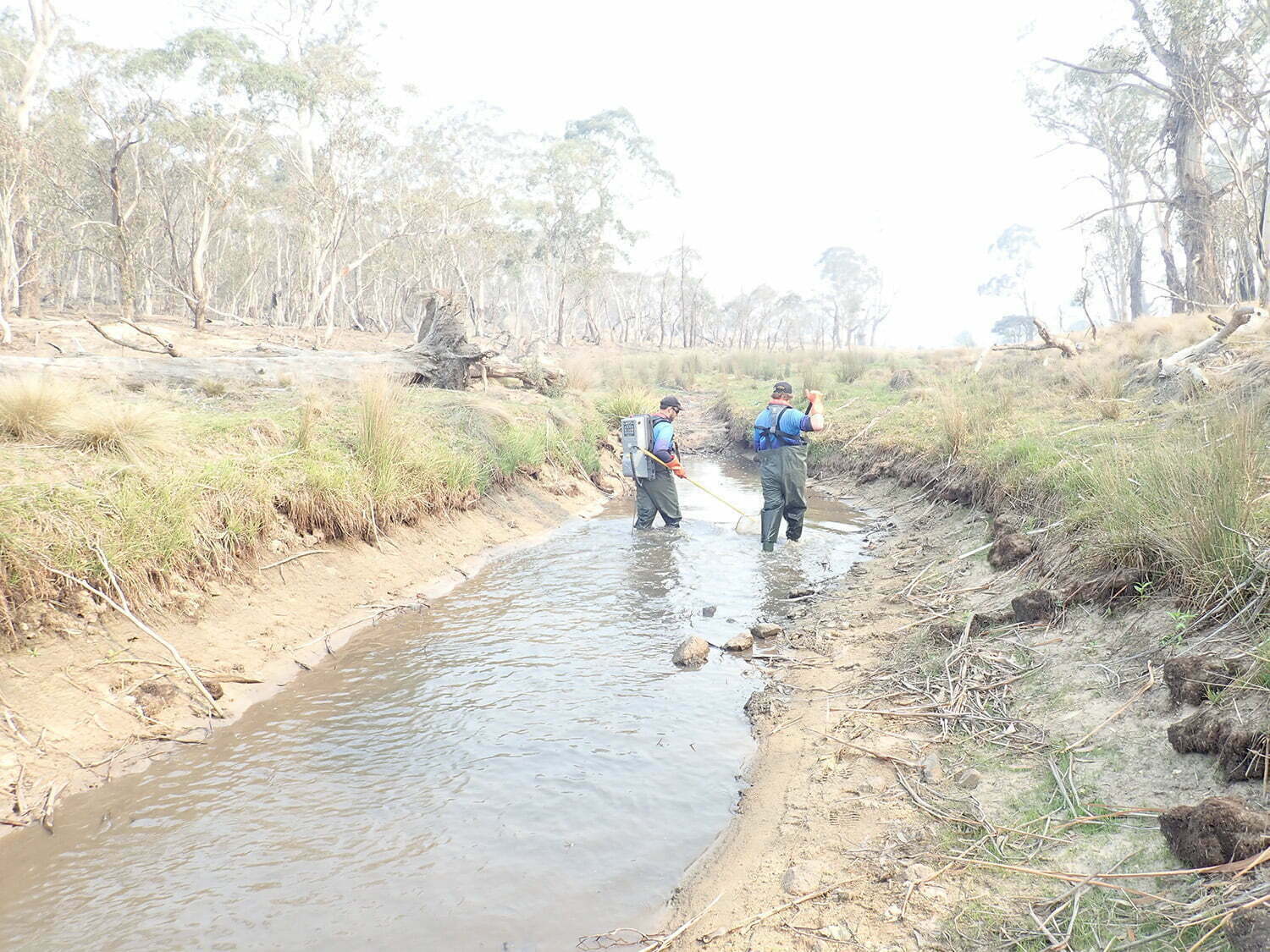
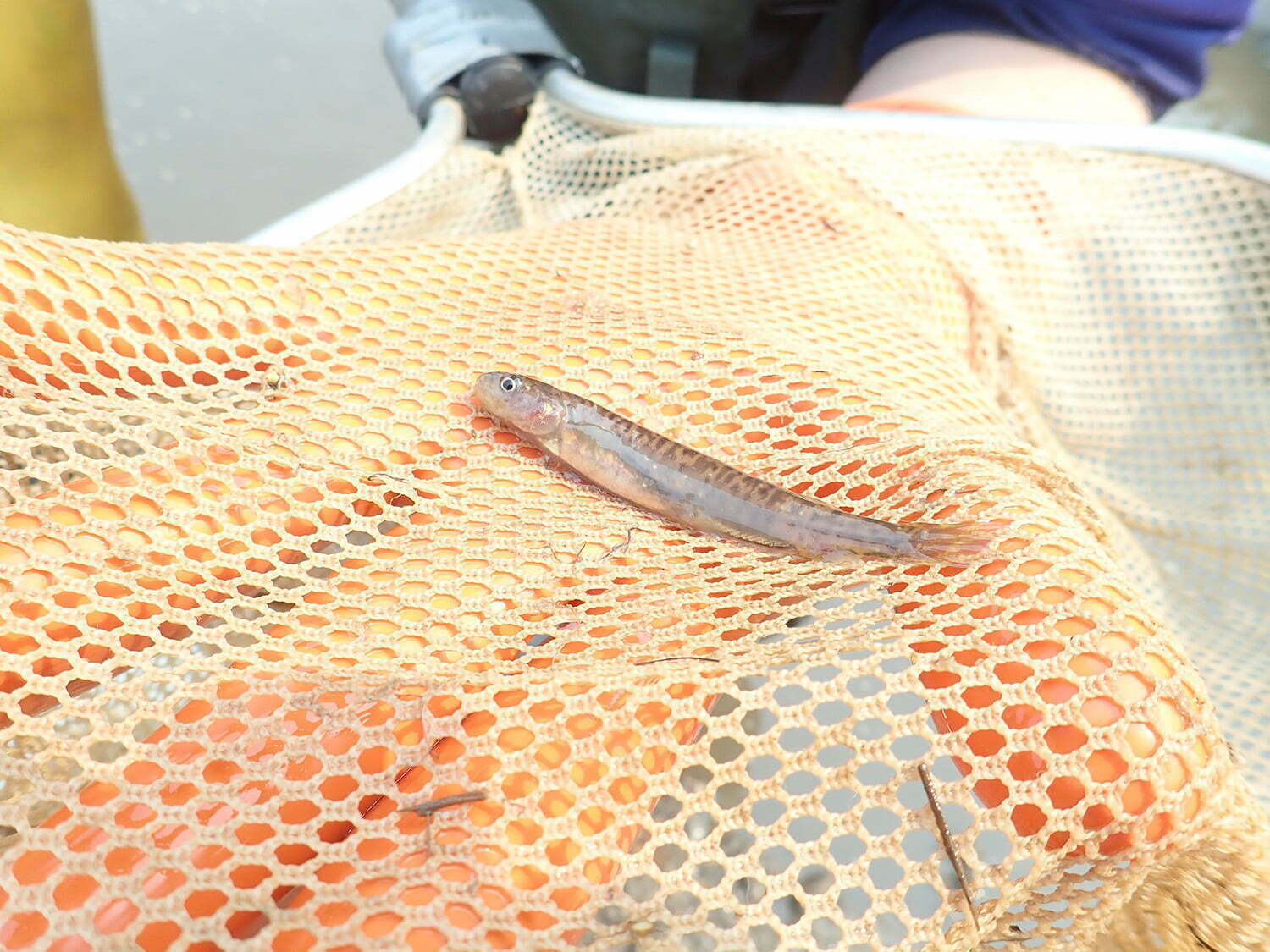

Stocky Galaxias are listed as endangered by the International Union for Conservation of Nature and, with only a few thousand left, it is hoped that submissions for the fish to be listed as threatened in Australia will be acted upon. Once a species is listed as threatened, funding can be gained to assist in addressing the factors that are negatively impacting upon the species, as well as supporting rescue attempts.
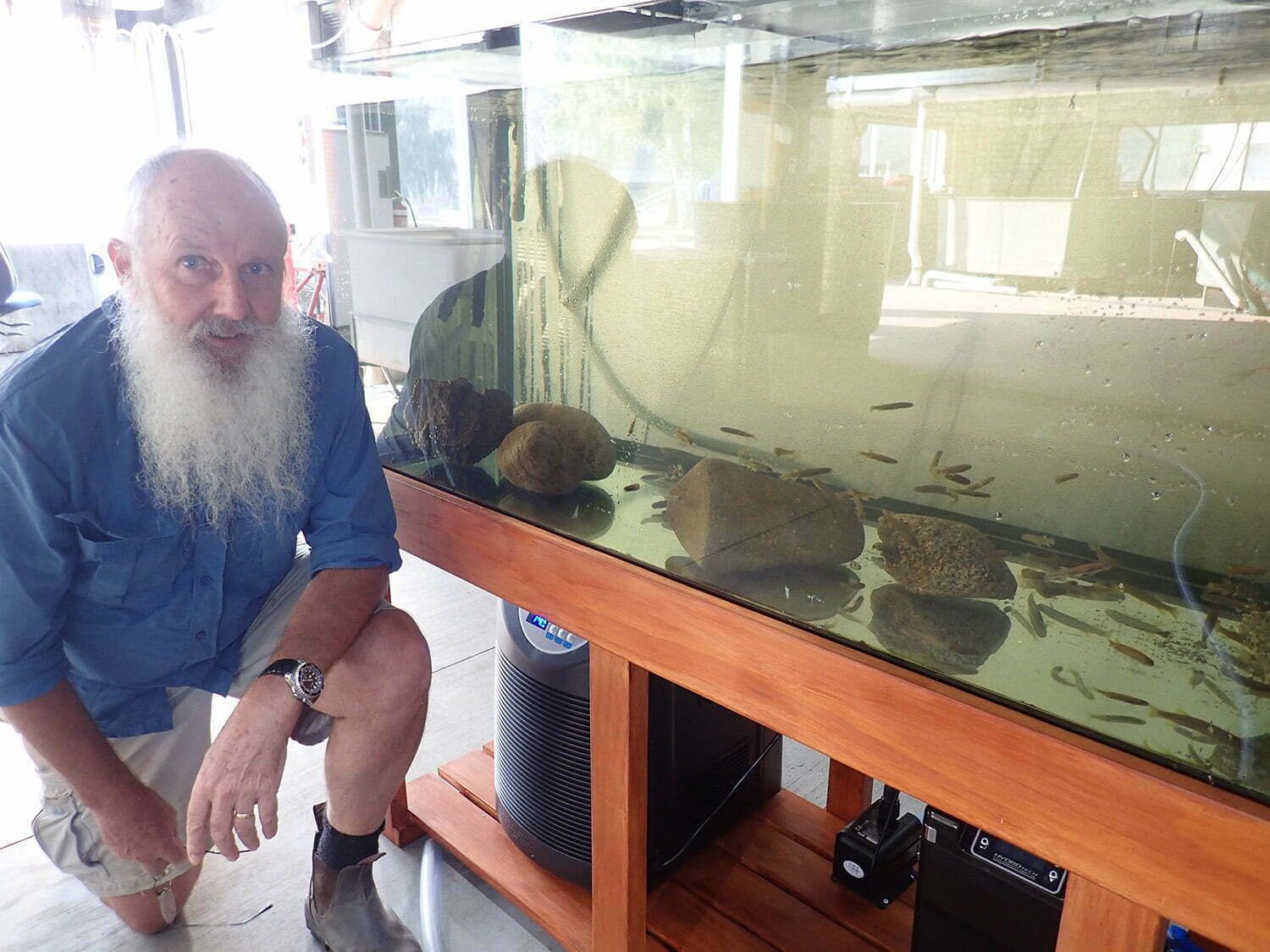
A second trip a week later to rescue another galaxid species, the Short-tailed Galaxias (Galaxias brevissimus) was not as successful. This fish is smaller than the Stocky Galaxias, at about 7cm in length, with a short tail and it’s body covered in a pattern of small to moderately large brown to almost black profuse blotches and spots, some coalescing to form larger patches. There are just two populations left of this fish, separated by a stretch of trout-infested river. One of these populations on the Bumberry Creek has been burnt, and the fires were too active for Mark to get in to rescue any of the fish. The second population at Jiboloro Creek yielded 30 fish, but the creek itself was already badly affected by drought, with water temperatures up to 29 degrees celsius, and the water quality extremely poor due to stock manure being washed into the remaining muddy pools.
What can we do to help?
When we asked Mark what we could do to help the Stocky Galaxid and his mates he listed four key actions:
- Get species listed more quickly in the Threatened Species & Ecological Communities list. A submission to inclusion as a threatened species for the Stocky Galaxias has been waiting for nearly 2 years, with the fish unable to access any resources to prevent its loss.
- Make fish a priority in the National Threatened Species Strategy – at the moment we have 30 plants, 20 mammals and 20 birds listed in the strategy – but no fish or Murray Crayfish which are also in dire need of help.
- Relieve the pressures that are continuing to threaten the habitat of the Stocky Galaxias, feral horses in Kosciouzko National Park now number up to 20,000 with the impact of grazing, manure into the water and trampling of habitat all major threats to the small area of habitat left for the little fish.
- Ask serious questions about the potential impact of Snowy 2.0 – at the moment there is the potential for invasive fish to enter into these precious upland river systems with Redfin carrying the EHN virus which we know wipes out Macquarie Perch (another threatened fish living in these rivers) and the native Climbing Galaxid able to go up the waterfall which currently protects the Stocky Galaxid from trout. Once Climbing Galaxid reach the habitat to Stocky Galaxid the species will either get taken over or hybridise, losing the species forever.
Stay connected to the rivers you love
Sign up to our monthly email newsletter and be the first to see inspiring stories, practical resources, and ways to make a real difference for our waterways and the native species that depend on them.
Be a part of our community 💚

The ARRC acknowledges the Country we live on
We acknowledge and respect Aboriginal and Torres Strait Islander Peoples as the Traditional and Continuing Custodians of Country. We respect and learn from Elders past, present and emerging, valuing their knowledge, insights, cultures and connections to the waterways we love and care for.
Our Reflect Reconciliation Action Plan promotes a reconciled Australia by supporting and empowering Aboriginal and Torres Strait Islander voices and experience in the work we do to restore and protect our waterways. We make every effort to involve First Nations collaboration and partnerships in all our on-ground projects.
Support our work
There are multiple ways to show your support for what we do.
Choose your own adventure.
Every donation makes an impact.
100% of proceeds go directly towards our work restoring rivers.
Join us at an upcoming planting day or community event.
Collaborate with us on a range of projects, working to restore our rivers together.
Work with us to achieve sustainability goals and make a positive environmental impact.