Most of Australia's rivers don't flow neatly through protected reserves. They move through working, privately owned landscapes, which make up around 60% of land in Australia. It's here where private decisions quietly determine water quality, erosion rates, soil health, habitat condition, and the survival of riparian vegetation across entire catchments.
It’s also where some of the most significant opportunities for large-scale restoration exist, which is why for over 18 years the Australian River Restoration Centre (ARRC) has worked alongside landholders to restore rivers at a catchment scale.
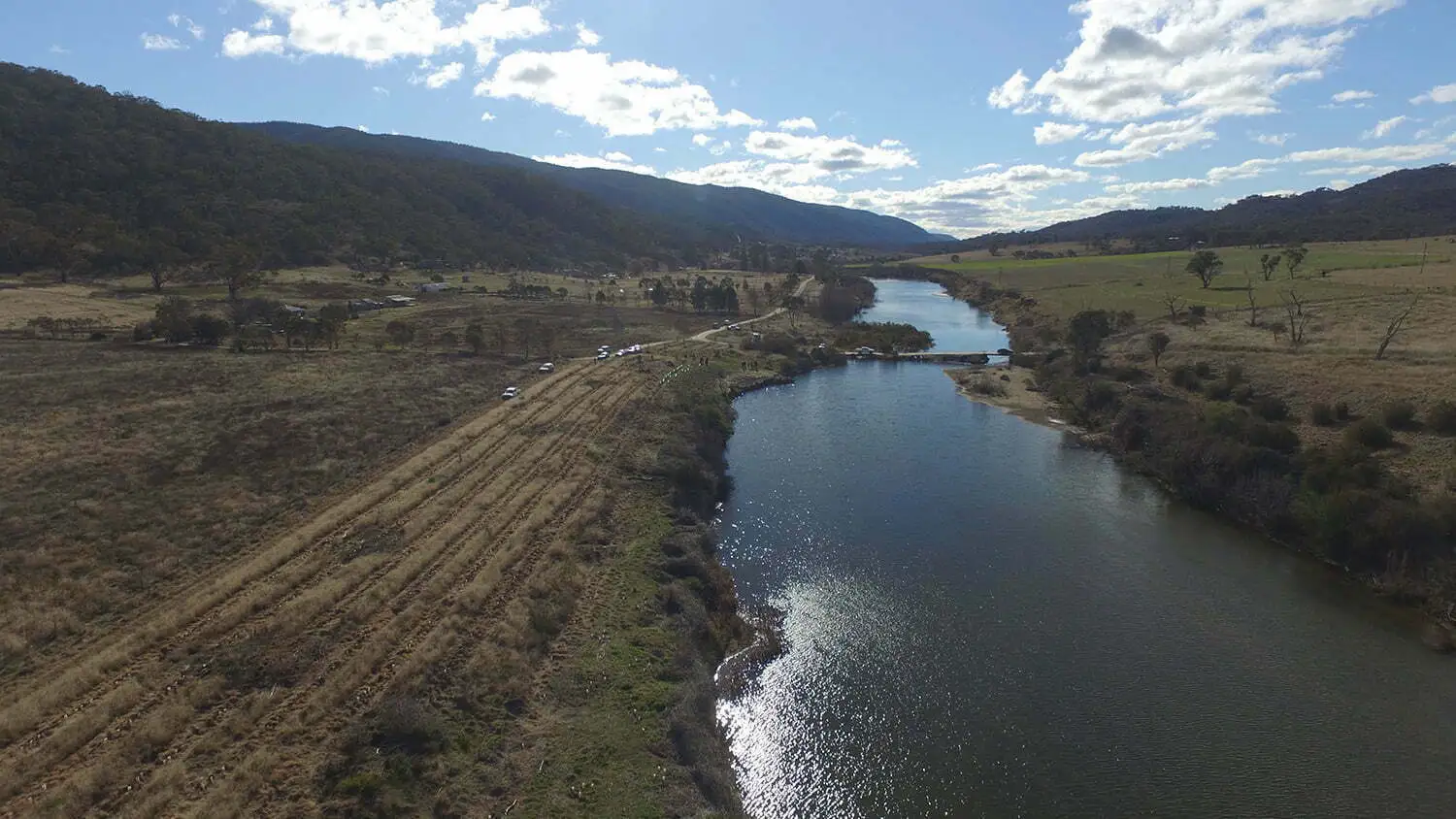
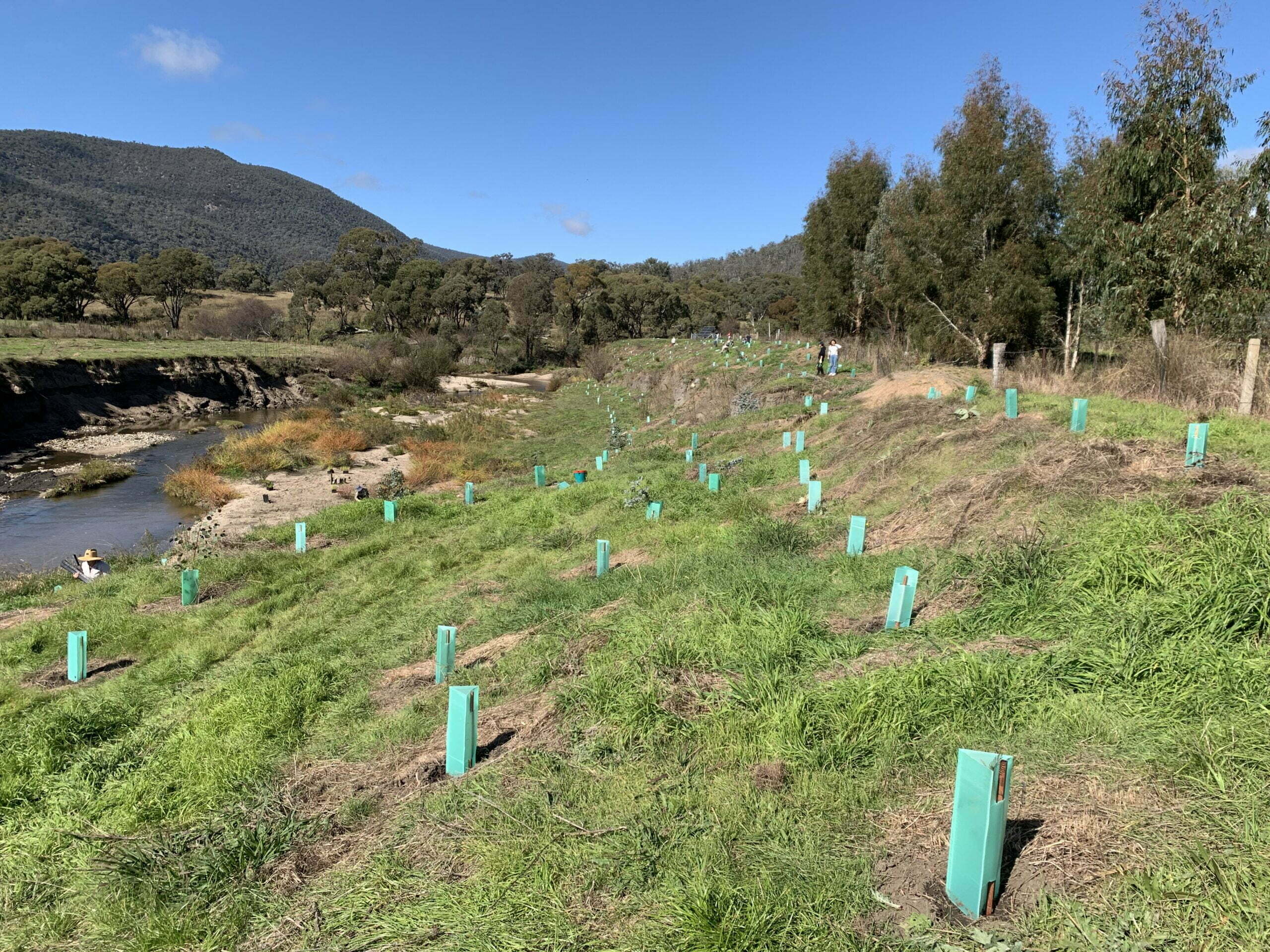
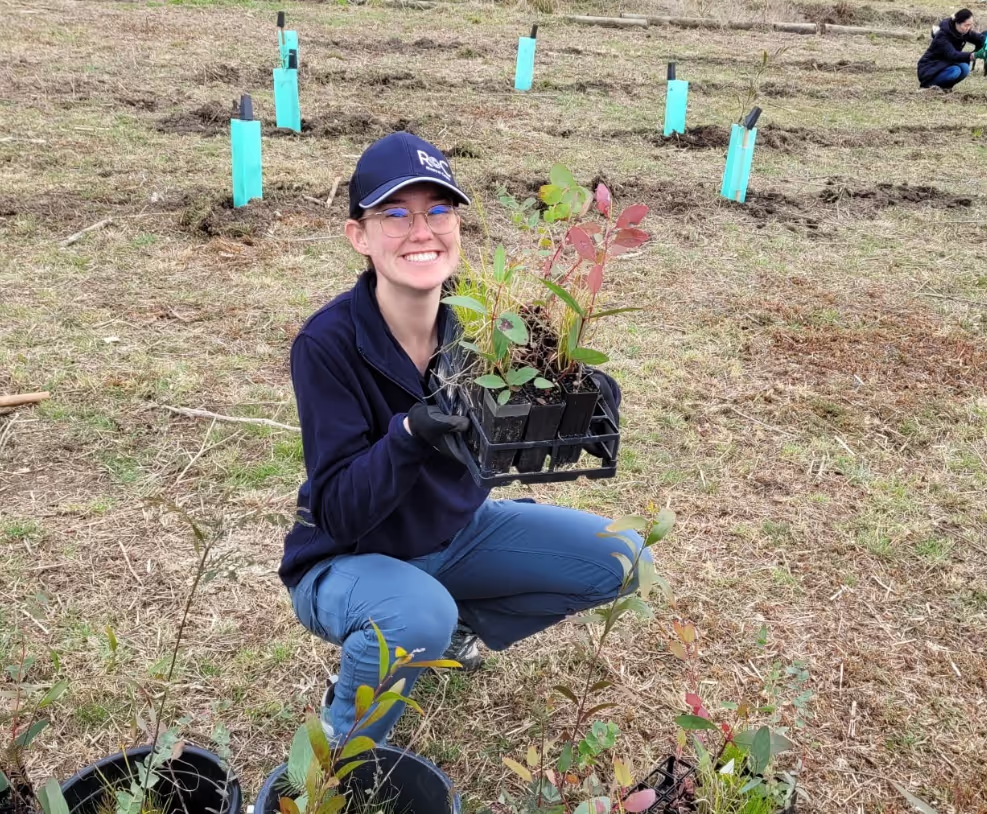
This year, we wrapped up a decade of work in the Goulburn region funded by Bush Connect and NSW Environmental Trust Program. This project built on long-term collaboration, shared investment, and real action on-ground. Across 30 landholders and more than 50 kilometres of waterways, we have seen what becomes possible when restoration is embedded within working landscapes:
- 25,900 trees planted
- 408 hectares of riparian land restored
- 402 hectares of weed control delivered
Such outcomes result in measurable improvements in water quality and ecosystem resilience, but perhaps the most important outcome is that these changes persist. Restoration built in partnership with the people who live and work on the land creates a vested interest in continuing to protect these systems, passing on knowledge, passion, and the land itself from generation to generation.
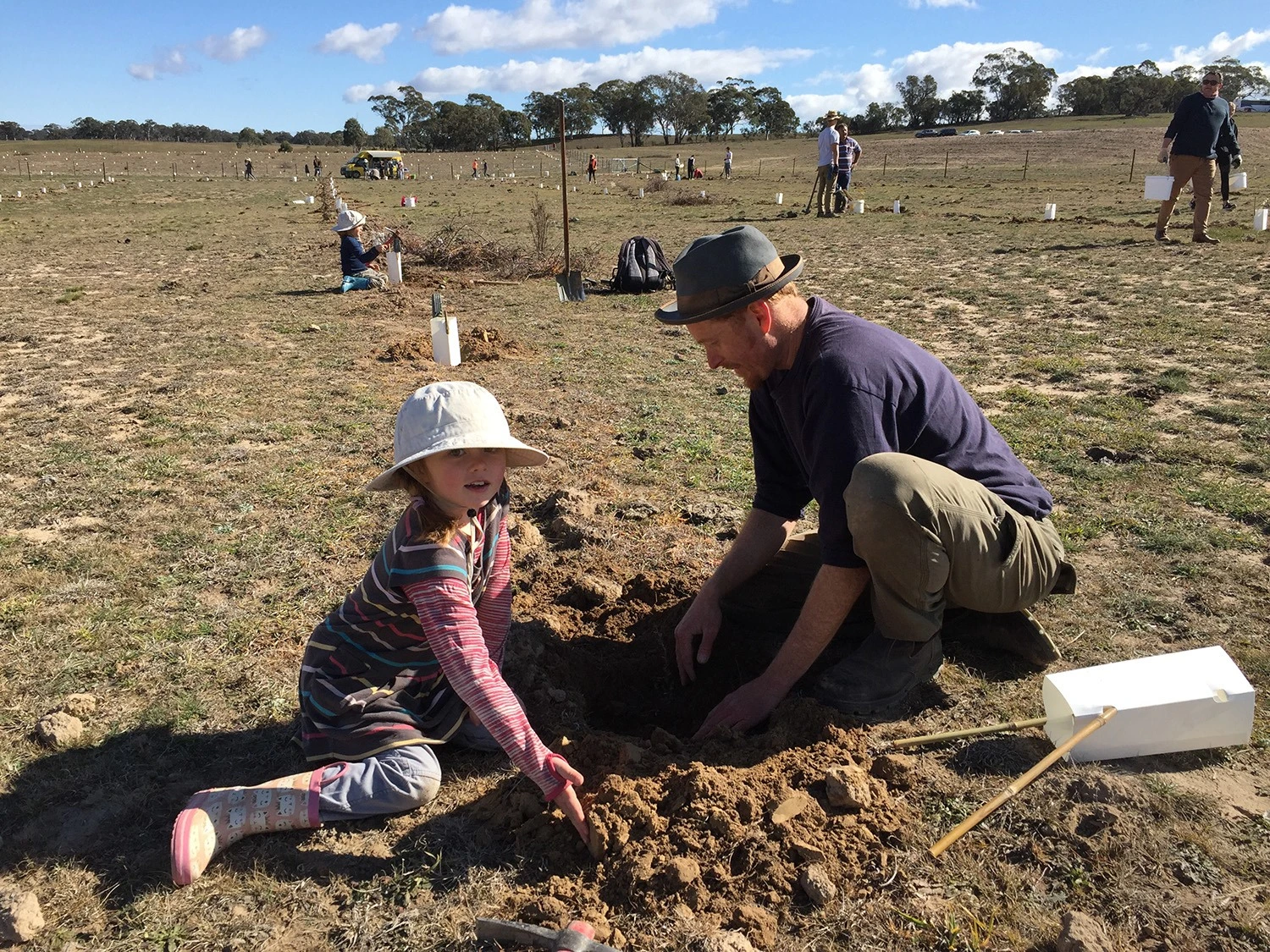
A decade of restoration in the Goulburn
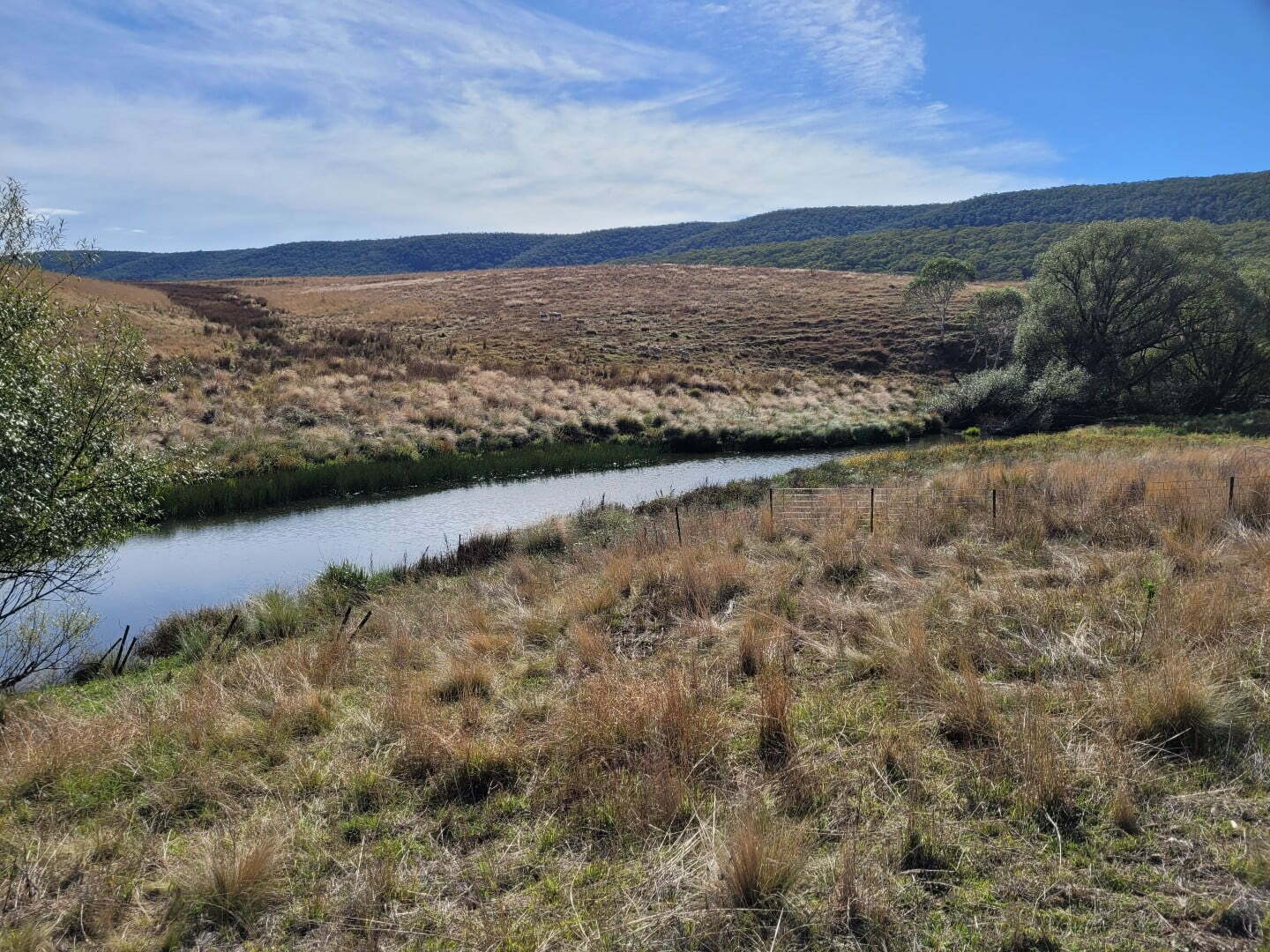
Ten years ago, many of Goulburn’s waterways reflected common long-term pressures: eroding banks, high sediment loads, degraded riparian vegetation, and streams that responded to rainfall with rapid runoff rather than steady flow.
Ten years later, the landscape tells a different story.
On the Kilby property, a creekline once carrying heavy sediment loads and unstable banks has been transformed. Stock were fenced out, erosion points stabilised, and native vegetation allowed to recover.
As landholders Steve and Megan Kilby observed:
“When pumping water up the dam, it used to be mucky brown, but now it’s crystal clear.”
Their property is one of 42 sites where this kind of transformation has taken place across the Goulburn catchment. At that scale, the cumulative benefits extend well beyond the private land itself:
- Stabilised riverbanks
- Improved water filtration through restored riparian corridors
- Quantifiable carbon sequestration
- Improved aquatic habitat connectivity
- Enhanced water quality
.webp)
The Opportunity
Backed by 18 years of experience, we currently have catchment restoration programs ready to go that can help organisations achieve measurable outcomes across water security, biodiversity, carbon sequestration, and soil health.
Our services span catchment scale restoration programs to translate restoration outcomes into reportable data, supporting organisations that are working toward nature positive and water security commitments. As we expand this model into new catchments across Australia, we are looking to partner with organisations whose work connects to water security, catchment resilience, and long-term environmental impact.
.webp)
If your work touches water or climate resilience, it touches rivers. We would welcome the opportunity to explore what’s possible together.
Rivers of Carbon: Goulburn District River Linkages project was funded by New South Wales Environmental Trust Bush Connect Program.

Discover Our Services
Our services are designed to meet your needs. From consulting to implementation, we have the expertise to help you thrive.